What We’ve Learned Since 2002
Many women have faced long-standing confusion and conflicting information about hormone replacement therapy (HRT). Much of that uncertainty can be traced back to the Women’s Health Initiative (WHI) study published in 2002. The initial findings received widespread media attention and led millions of women to discontinue hormone therapy or avoid it altogether. However, researchers have spent more than two decades reexamining the data, and today’s scientific understanding is far more nuanced.
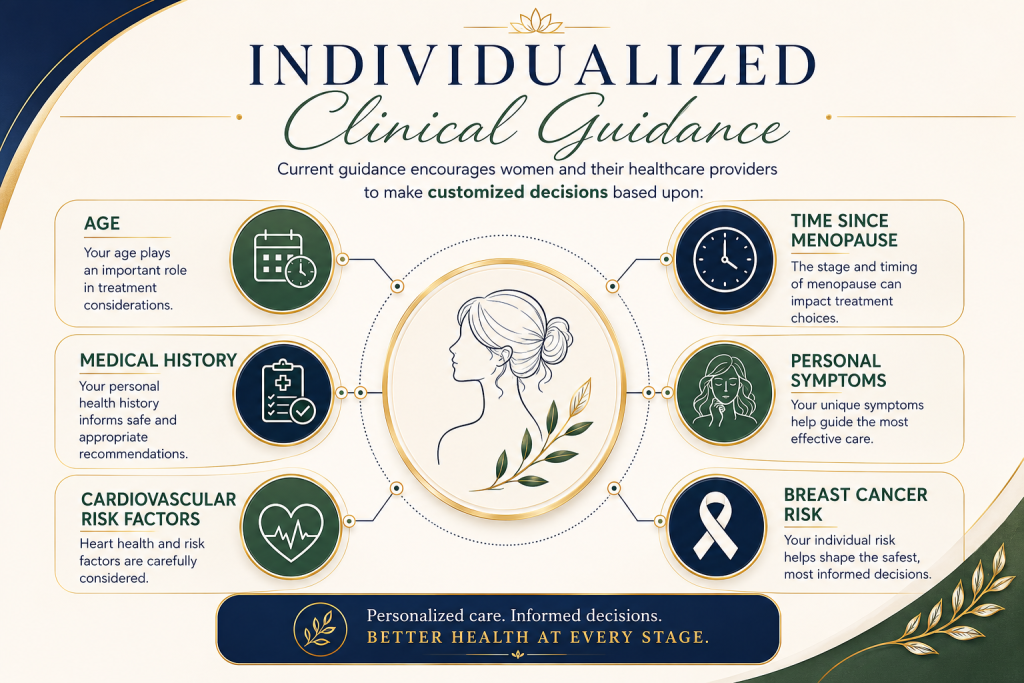
The original WHI study included many women who were significantly older than the average woman beginning menopause—most participants were in their 60s, and many started hormone therapy more than 10 years after menopause. Subsequent research has shown that age and timing matter significantly.
Current evidence indicates that healthy women who begin hormone therapy before age 60 or within 10 years of menopause often have a very different benefit-risk profile than women who start treatment later in life. This concept has become one of the most important advances in menopause medicine.
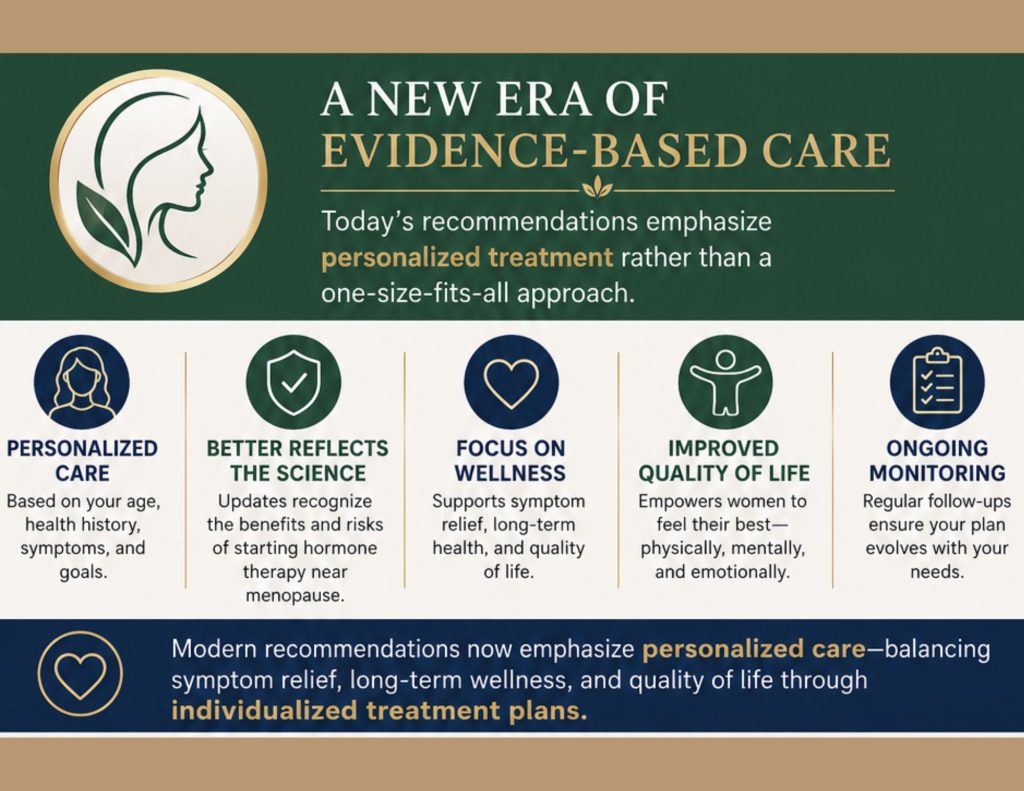
Indeed, a new era of evidence-based care is emerging.
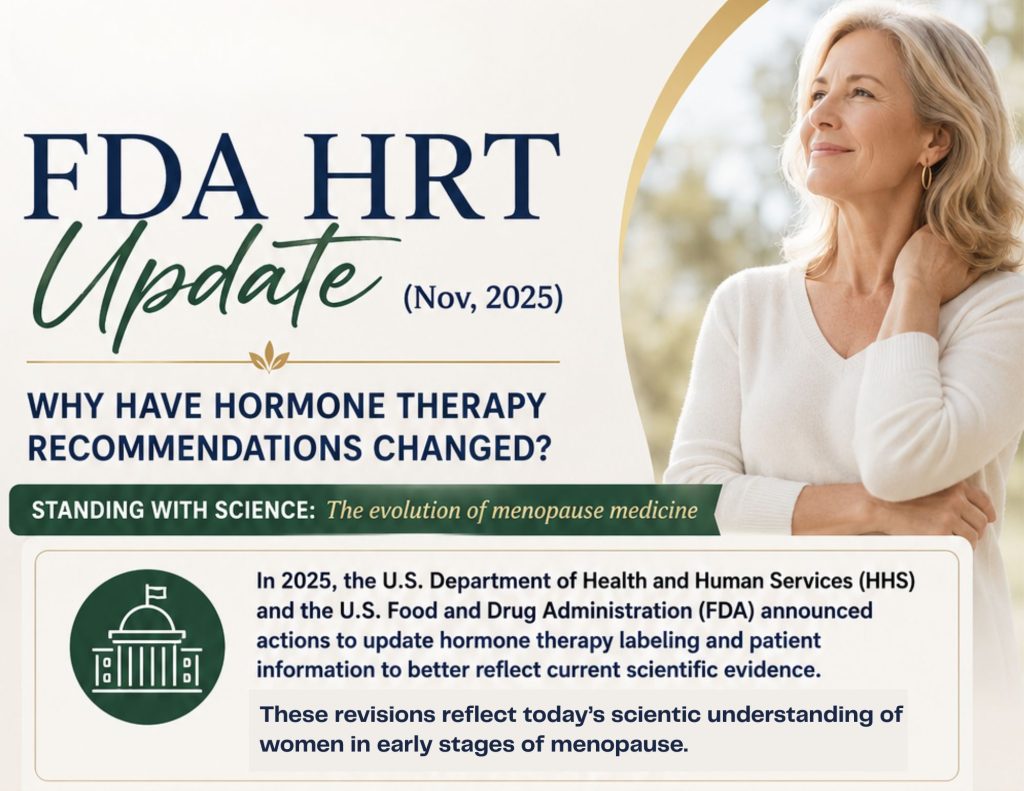
In 2025, the U.S. Department of Health and Human Services (HHS) and the U.S. Food and Drug Administration (FDA) announced actions to update hormone therapy labeling and patient information to better reflect current scientific evidence. These updates recognize that earlier warnings did not adequately distinguish between women beginning therapy near menopause and those initiating treatment many years later.
Additionally, we follow a clinically rigorous, research-driven bioidentical hormone therapy approach built on decades of literature and physiology-based dosing. As a result, we base this method on structured, standardized practices and solid evidence, not templates or generic protocols.
Our team adapts bioidentical protocols to your specific lab results and biological needs, ensuring precise dosage and maximum clinical safety.
Our approach emphasizes:
Core clinical principles include:
The “Window of Opportunity”
Bioidentical Hormone Replacement Therapy (BHRT) may also help support:
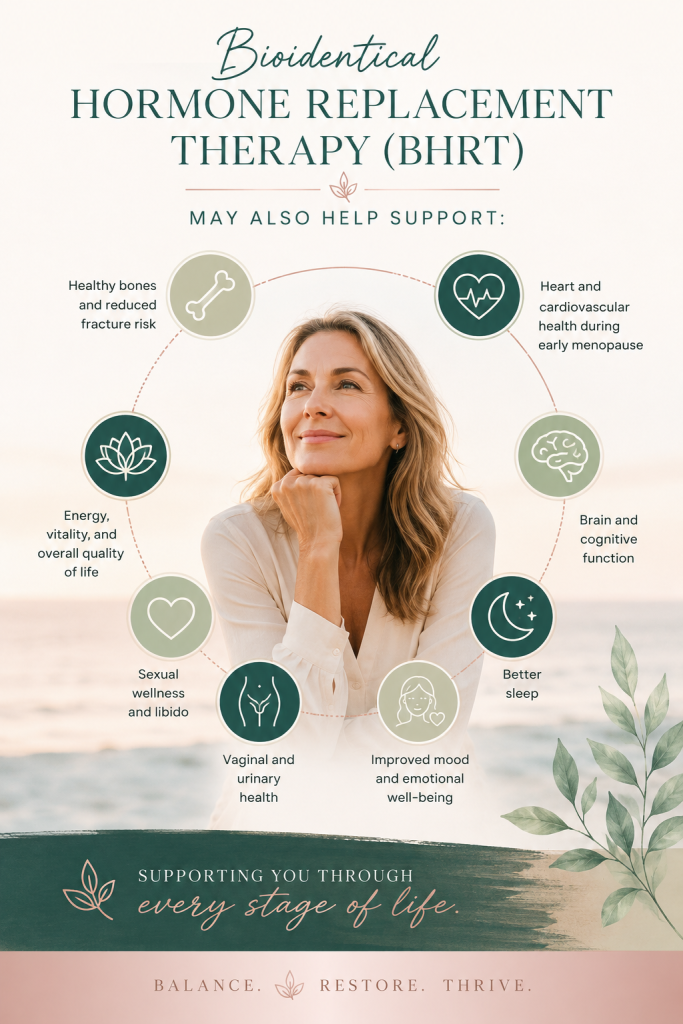
Healthy bones and reduced fracture risk
Heart and cardiovascular
Brain and cognitive function
Better sleep
Improved mood and emotional well-being
Vaginal and urinary health
Sexual wellness and libido
Energy, vitality, and overall quality of life
In fact, for many healthy women experiencing bothersome menopausal symptoms, hormone therapy remains the most effective treatment for hot flashes, night sweats, and other vasomotor symptoms.
Our Customized HRT Process
- Practitioner reviews your health history
- Hormonal Panels run for objective data
- Symptoms ranked for subjective data
- One-on-one practitioner consult with client for full evaluation of all markers
- Practitioner develops a personalized hormone optimization plan
- Pharmaceutical products are dispensed to the client’s specific deficiencies
- Symptoms are monitored by practitioner, dosing is adjusted as necessary
The goal isn’t simply to treat menopause—It’s to help you feel vibrant, healthy, and confident throughout every stage of life.